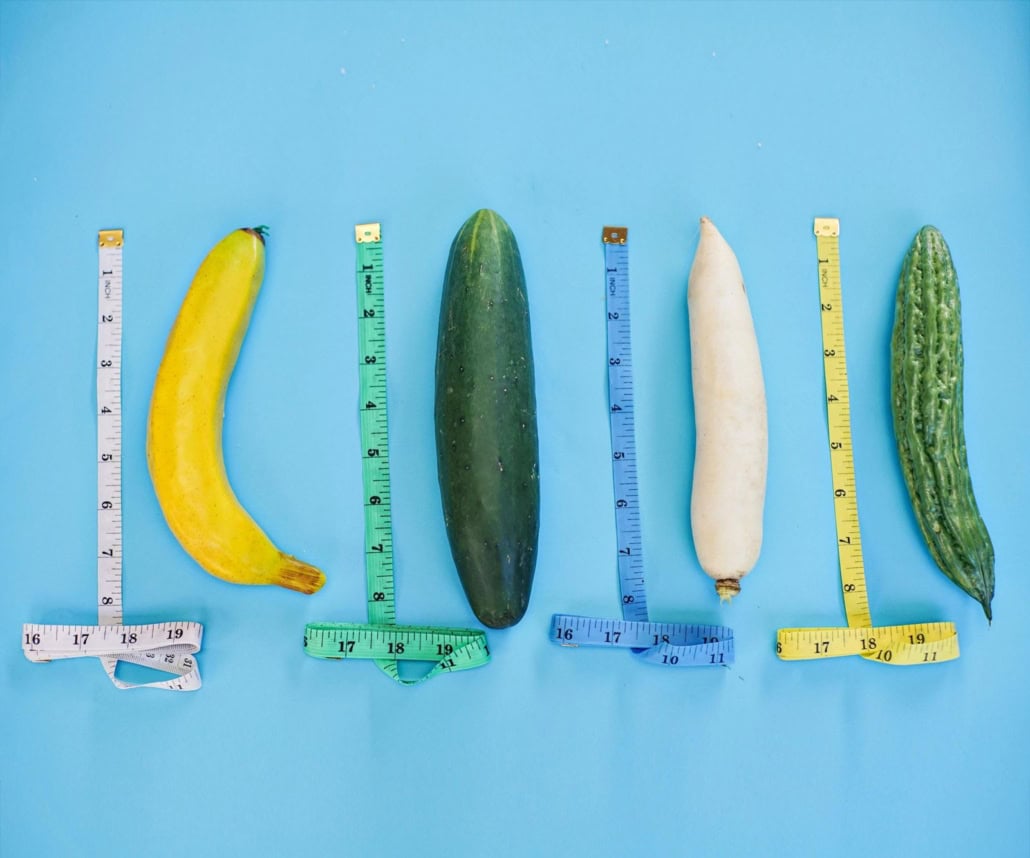
Size Matters. (Just Not the Way You Think)
Let’s talk about the elephant in the room. Or, depending on who you ask, the entirely average-sized mammal in the room.
For decades, the cultural narrative around sex has been dominated by a single, exhausting obsession: size. It’s in the jokes we make, the porn we watch, the locker room whispers, and the quiet anxieties men carry into the bedroom like invisible luggage. The message is loud and relentless — bigger is better, and if you don’t measure up, you’re starting the race with a flat tire.
But here is the truth, backed by biology, anatomy, and millions of women who are tired of pretending otherwise: size is rarely the deciding factor in sexual satisfaction. In fact, treating it like the main event is exactly why so much sex ends up being deeply underwhelming for everyone involved.
It’s time to bust this myth properly. Not with vague reassurances, but with actual science, real anatomy, and a healthy dose of honesty.
Where Did This Myth Come From?
To understand why the “bigger is better” belief is so persistent, we have to look at where it comes from. And the answer, unsurprisingly, is not from women.
Most of our cultural education about sex is visual. Pornography, in particular, has shaped an entire generation’s understanding of what sex is supposed to look like. And pornography, by its very nature, prioritizes what looks impressive on camera over what actually feels good in reality. It is a performance industry, not an educational one. The casting choices it makes reflect what is visually dramatic, not what is anatomically optimal.
Add to that centuries of male-dominated storytelling, locker room mythology, and a culture that has historically measured male worth through physical dominance, and you have a perfect recipe for a deeply entrenched, largely fictional belief system.
The irony? Most of the people perpetuating this myth are men talking to other men. Women, by and large, have been saying something quite different for a very long time. We just haven’t been listening.
The Anatomy Argument (Or: What Your Biology Teacher Should Have Told You)
Let’s get into the science, because this is where the myth really falls apart.
The vaginal canal is, on average, between 7 and 12 centimetres deep when unaroused, and expands during arousal. The average erect penis is approximately 13 centimetres. In other words, most men are already working with more than enough. The obsession with being larger than average is, anatomically speaking, solving a problem that doesn’t exist.
But here’s the more important point. The majority of the nerve endings in the vagina — the ones responsible for pleasure — are concentrated in the first third of the vaginal canal. That’s roughly the first 3 to 4 centimetres. Beyond that, nerve density drops off significantly. The deeper regions of the vagina have far fewer sensory nerve endings and, in some cases, deeper penetration can actually cause discomfort rather than pleasure.
This means that a partner who is obsessing over depth is often literally bypassing the most sensitive areas. It’s like trying to ring a doorbell by repeatedly throwing a couch at the house. Sure, you’re making an impact. But you’re missing the point entirely.
The Clitoris: The Real MVP Nobody Talks About Enough
If we are going to talk about pleasure, we cannot ignore the star of the show.
The clitoris is responsible for the vast majority of female orgasms. Studies consistently show that approximately 70 to 80 percent of women require clitoral stimulation to reach orgasm. And here is the anatomical fact that changes everything: the clitoris sits entirely outside the vaginal canal.
No matter what size a man is, if he is relying solely on penetration to get the job done, he is playing a losing game. The best lovers understand that penetration is often the side dish, not the main course. The clitoris — not depth, not girth, not any measurement on a ruler — is where the real action is.
What’s more, the clitoris is far larger than most people realize. What you see externally is just the tip. The full clitoral structure extends internally, wrapping around the vaginal canal in a wishbone shape, with two bulbs and two legs that can be up to 10 centimeters long. This internal structure responds to stimulation in ways that have nothing to do with penetration depth. It responds to pressure, rhythm, and attention.
This is where technique becomes everything.
The Problem with “The Tool”
There is a strange irony in the size obsession. Men who are well-endowed often fall into the trap of thinking they don’t need to try as hard. They rely on “the tool” to do the work. They show up expecting the architecture to speak for itself.
But a grand piano doesn’t make you a musician. If you don’t know how to play the keys, you’re just making noise.
In contrast, partners who don’t rely on size often become exceptional lovers precisely because they have to learn the instrument. They learn to communicate. They learn to use their hands, their mouths, and their emotional intelligence. They pay attention to what their partner is actually responding to, rather than what they assume should feel good. They ask questions. They adapt. They stay present.
And that — not any physical measurement — is what separates a forgettable experience from one that gets talked about for years.
The Research Agrees
This isn’t just anecdotal. Research consistently backs it up.
A study published in the Journal of Sexual Medicine found that women rated movement, rhythm, and the ability to read their partner’s responses as significantly more important than size. Another study found that women were more likely to describe their most satisfying sexual experiences in terms of emotional connection, communication, and attentiveness — not physical attributes.
A large-scale survey of over 52,000 adults in the United States found that only 14 percent of women reported being dissatisfied with their partner’s size. Meanwhile, far higher percentages reported dissatisfaction with the quality of the experience — specifically, a lack of attention to their needs, poor communication, and partners who were too focused on their own pleasure.
The data is clear. The myth is not.
What Actually Matters
If size isn’t the secret weapon, what is? Ask any woman what makes sex truly incredible, and you will hear the same answers repeated over and over. None of them requires a ruler.
Presence and Attention
Good sex requires you to be fully in the room. Not in your head, not worrying about your performance, and definitely not worrying about your measurements. It requires paying attention to the person in front of you — noticing when their breathing changes, when they pull closer, and when they pull away. The partners who are truly present are the ones who are remembered.
Emotional Safety
You cannot have great sex if you are tense. And you cannot relax if you don’t feel safe. The best lovers create an environment where their partner feels comfortable enough to completely let go — to ask for what they want, to say what doesn’t feel good, and to be vulnerable without fear of judgment. That kind of safety doesn’t come from size. It comes from character.
Communication
The single most underrated skill in the bedroom is the ability to talk. Not dirty talk — although that has its place — but genuine, honest communication. “Does this feel good?” “What do you want?” “Tell me what you like.” These questions are more powerful than any physical attribute. They signal respect, curiosity, and a genuine investment in the other person’s experience.
Technique and Adaptability
What felt amazing yesterday might feel different today. Good technique isn’t about memorizing a sequence of moves; it’s about being adaptable. It’s about understanding that bodies are not static, that arousal changes, and that the best lovers are the ones who stay curious and keep learning. Technique can be developed. It can be practiced. It can be improved. Size cannot.
Patience
This one is underestimated almost universally. The average woman takes significantly longer to reach orgasm than the average man. Patience — the willingness to slow down, to stay present, and to prioritize your partner’s experience — is one of the most powerful tools in any lover’s arsenal. And it costs absolutely nothing.
A Note to the Men Reading This
This article is not an attack. It is an invitation.
The size myth doesn’t just hurt women — it hurts men too. It creates anxiety, insecurity, and a performance pressure that poisons intimacy before it even begins. Men who are convinced that they are “not enough” physically often compensate in all the wrong ways or disengage from intimacy altogether. That is a tragedy.
The truth is liberating: the things that make you a great lover are entirely within your control. You can learn. You can communicate. You can pay attention. You can be present. You can be patient. None of that requires anything other than the decision to show up fully.
The most powerful sexual organ you have isn’t between your legs. It’s between your ears.
The Bottom Line
Does size matter at all? Sure. In the same way that height matters in basketball. It might give you a slight advantage at the tip-off, but if you can’t dribble, pass, or shoot, you’re still going to lose the game.
It is time to retire the obsession. Learn to communicate. Learn to pay attention. Learn how the body actually works — because it is genuinely fascinating, and understanding it will change everything.
The manual will always matter more than the tool.
Yours, Joey
